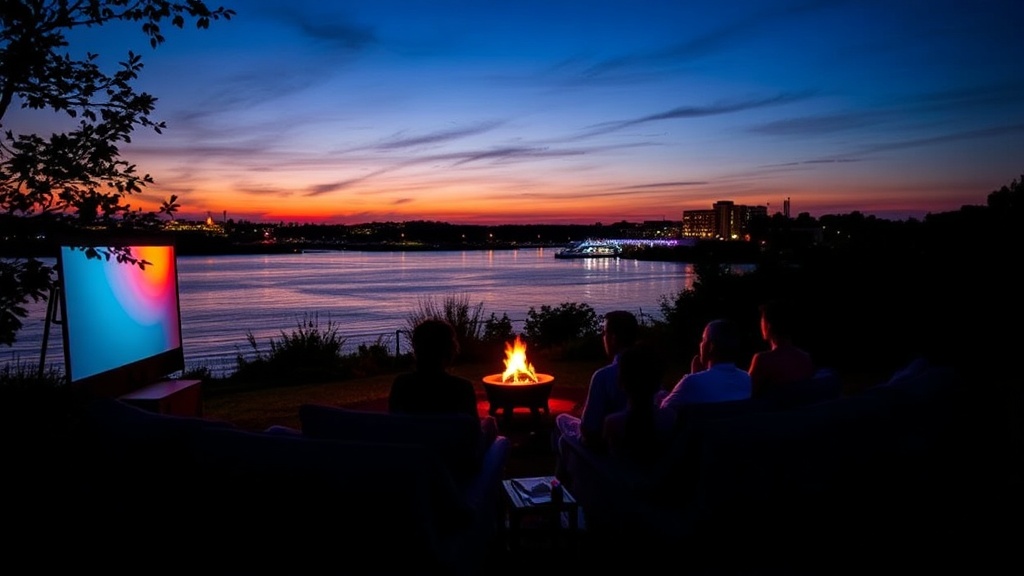
Setting Up a Perfect Outdoor Movie Night by the River

Did you know that outdoor movie viewership in North America has seen a massive spike in recent years, with many families opting for backyard cinema over traditional theater visits? Setting up a high-quality outdoor cinema near the Richelieu River requires specific technical preparation to combat humidity, wind, and light pollution. This guide covers the gear you'll need, the technical setup for a crisp image, and how to manage the unique environmental factors of the Montérégie region.
What Equipment Do You Need for an Outdoor Movie Night?
You need a high-lumen projector, a portable screen or a flat white wall, and a reliable sound system to create a cinematic experience. Most standard home projectors struggle in the dark, so you shouldn't settle for anything less than a decent brightness level.
Since we live near the water, humidity can be a real pain. You don't want your electronics getting damp. I suggest looking at the Anker Nebula series for something portable, or if you want a true home theater experience, a BenQ projector is a solid bet. If you're on a budget, even a decent projector from a big-box retailer works—just make sure it has high lumens.
Here is a quick breakdown of the core gear:
- The Projector: Look for at least 2,000 lumens if you're starting before total darkness.
- The Screen: A foldable fabric screen is much easier to pack away than a rigid surface.
- Sound: Bluetooth speakers are great, but a wired connection prevents "audio lag" (a common frustration).
- Seating: Don't forget the bean bags or heavy-duty lawn chairs.
If you're planning this for a larger group, you might want to check out my previous thoughts on organizing a backyard picnic near the Richelieu to ensure your food and seating are ready before the movie starts.
How Do I Prevent Mosquitoes and Bugs During the Movie?
The most effective way to keep bugs away is to use a combination of citronella candles, oscillating fans, and high-quality repellent.
Let's be honest—nothing ruins a movie faster than a mosquito landing on your eye. Being near the river means the insect population can be quite aggressive once the sun goes down. I've found that a simple electric fan pointed toward the seating area works wonders. It doesn't just keep you cool; it physically prevents mosquitoes from landing. It's a simple trick that actually works.
If you want to be extra prepared, consider these options:
- Thermacell: These portable repellent devices are much more effective than just wearing spray.
- Citronella Candles: Great for scent, but they won't stop a determined swarm.
- DEET-based Sprays: Use these if you're heading into more wooded areas of Beloeil.
It's worth noting that the wind direction matters here. If the breeze is blowing from the river toward your yard, expect more bugs. Position your seating accordingly.
How Much Does an Outdoor Cinema Setup Cost?
A basic setup can cost as little as $200, while a high-end professional-grade home theater rig can exceed $2,000.
Pricing varies wildly depending on whether you're buying new or looking at the used market. If you're just starting out, you don't need to drop a fortune. A decent budget setup is often more fun for a one-off event. On the flip side, if you plan on doing this every weekend, investing in better gear makes sense.
| Setup Type | Estimated Cost (CAD) | Key Feature |
|---|---|---|
| Budget/Starter | $150 - $400 | Portable, lower brightness |
| Mid-Range | $500 - $1,200 | Better lumens, wired audio |
| Premium/Pro | $2,000+ | High definition, large screen |
One thing to watch out for is the cost of the screen. Many people forget that a projector is useless without a proper surface. You can use a white bedsheet from a local shop, but a dedicated screen will give you a much sharper image.
How Can I Improve the Sound Quality Outdoors?
To get great sound, you should use external speakers and place them close to the seating area rather than relying on the projector's built-in speakers.
Projector speakers are notoriously weak. If you're trying to hear dialogue over the sound of the river or a neighbor's lawnmower, you'll struggle. I always recommend using a dedicated soundbar or even a pair of JBL portable speakers. If you can, use a physical cable (Aux) to connect your device to the speakers. Bluetooth is convenient, but it can sometimes lose connection or have a slight delay—which is incredibly annoying during an action scene.
Place your speakers at ear level. If you're sitting on the ground, don't put the speakers on a high table. It'll sound thin and disconnected. If you're using a group of people, place the speakers slightly in front of the seating area to create an immersive feel.
The river environment can also affect sound. Water reflects noise in strange ways. If your neighbors are close by, be mindful of the volume. We want to enjoy our movies without getting a visit from the local authorities (or an angry neighbor).
If you're looking for a quiet spot to enjoy a movie with even less noise interference, you might enjoy exploring hidden gems for a quiet afternoon in Beloeil. The principles of finding a quiet, undisturbed space apply to your evening movie night as well.
One final tip: check your power sources. If you're using a long extension cord to reach a remote outlet, make sure it's a heavy-duty cord. You don't want to trip over it in the dark, and you certainly don't want a power surge to fry your projector mid-movie. A simple, well-placed outdoor light or a glow stick can help you navigate the yard without ruining the "theater" vibe.
Steps
- 1
Choose Your Screen and Projector
- 2
Arrange Comfortable Seating
- 3
Prepare Local Snacks and Drinks
- 4
Set the Mood with Ambient Lighting